
Global Strategy Rewired: China Is No Longer Just a Market — It’s a Strategic Variable


For decades, global strategy was relatively straightforward:
Why globalize?
Where to globalize?
How to globalize?
Today, those three questions remain — but the answers have fundamentally changed.
China is no longer simply a growth engine or cost platform.
It has become a strategic variable in every global operating model.
And that changes how companies must think.
1️⃣ Why Companies Came to China — And What Has Changed
For multinational industrial firms, China historically offered:
Cost-efficient manufacturing
Proximity to suppliers
Access to a massive and growing market
Integration into global supply chains
But post-COVID and amid geopolitical tensions, the equation has shifted.
China remains critical — yet more complex:
Growth is slower and more uneven
Competition is ultra-intense in many sectors
Regulatory scrutiny has increased
Data, IP, and compliance risks are structurally higher
Localization expectations are stronger
For many MNCs, China is no longer a pure efficiency play.
It is now a risk-adjusted strategic commitment.
2️⃣ At the Same Time — Chinese Firms Are Going Global
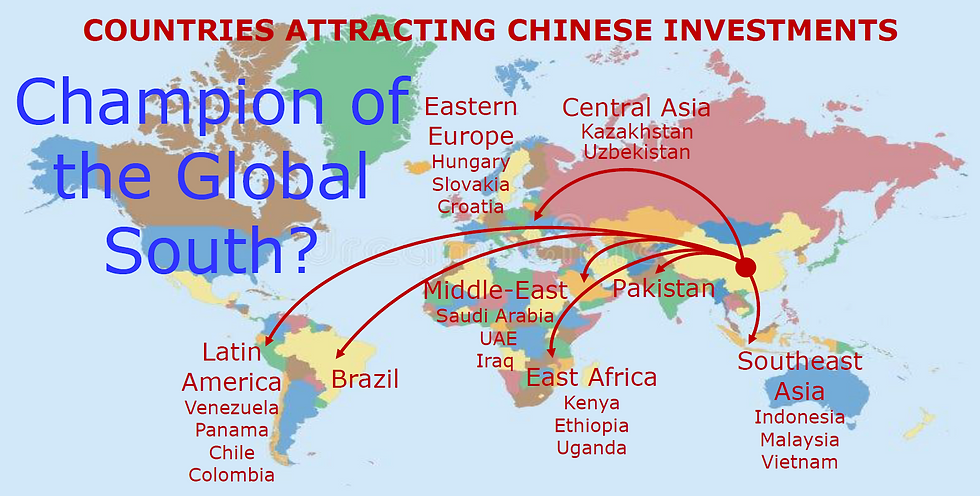
While Western companies reassess China exposure, Chinese companies are expanding outward.
The drivers are clear:
Domestic overcapacity
Slowing growth at home
Price wars compressing margins
Desire to secure new revenue streams
Their expansion patterns are pragmatic:
Southeast Asia
Middle East
Central Asia
Latin America
Select Eastern European entry points
Emerging markets first.
Mature markets later.
This mirrors what Western firms did in China 20 years ago — learn, adapt, scale.
The implication for European industrial players is significant:
Competition will not remain contained within China.
It will travel.
3️⃣ The Strategic Dilemma for MNCs
Companies today face a matrix of two variables:
Strategic importance of China
Operating and geopolitical risk exposure
Some will:
Deepen localization and embed deeply into the Chinese ecosystem
Operate selectively in niche segments
Diversify with China+1 models
Or gradually reduce exposure
The most successful firms share common traits:
Strong local supply chains
Local R&D capability
Digital integration
Empowered local management
Alignment with policy and regulatory frameworks
Localization is no longer marketing adaptation.
It is structural integration.

4️⃣ Why Many MNCs Struggle in China
Common patterns include:
Underestimating local competitors
Slow decision cycles versus “Chinese speed”
Misaligned global HQ structures
Insufficient local empowerment
Over-reliance on legacy brand strength
Meanwhile, local competitors:
Iterate faster
Accept thinner margins
Integrate vertically
Move aggressively into adjacent markets
The result is a structural asymmetry — not just a cost gap.
5️⃣ Why Chinese Firms Also Struggle Overseas
Expansion is not frictionless.
Chinese companies face:
Brand trust gaps
Regulatory hurdles
Cultural adaptation challenges
ESG scrutiny
Integration complexity in acquisitions
Some will fail.
But many will adapt.
And those who adapt will arrive in Europe with:
Competitive pricing
Strong vertical integration
Government-backed financing
Growing technology capability
The competitive landscape will continue to rebalance.
6️⃣ What This Means for Industrial Companies in 2026+
China can no longer be treated as:
Just a sourcing base
Just a growth market
Or just a geopolitical risk
It must be treated as:
A strategic ecosystem
A competitor incubator
A supply chain node
And a geopolitical variable
Global strategy is no longer about choosing “China or not China.”
It is about designing a structure that can operate:
With China
Alongside China
And in competition with China
Simultaneously.
That is a far more complex operating model.
Final Thought
The question is no longer:
“Should we be in China?”
The question is:
“Is our global operating model structurally designed for a world where China is both partner and competitor?”
Because the global map has not fragmented.
It has rewired.
About DMCA Solutions
Based closed to Shanghai, within one of Asia’s densest industrial ecosystems, DMCA supports European and China-based industrial firms in designing resilient sourcing strategies, strengthening supply architectures, and navigating competitive shifts across global markets.


Comments