
Mitigating Shipping Risks for Industrial and SME Supply Chains

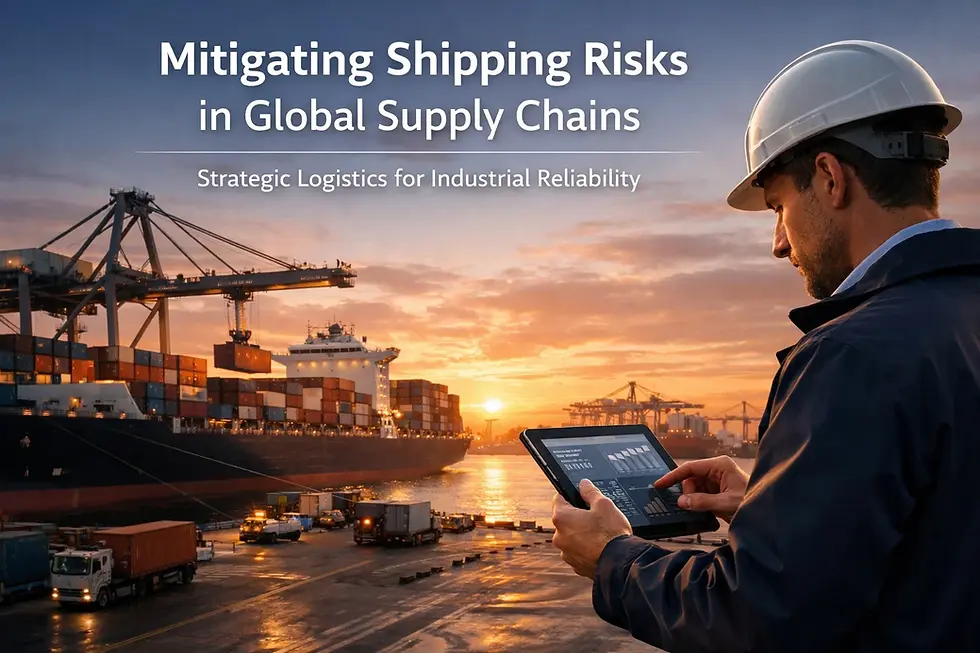
Shipping is not just a logistics function — it is a strategic risk factor.
In today’s global marketplace, small and mid-sized industrial businesses operate across multiple regions, currencies, regulatory environments, and transport corridors. One delayed container, one customs non-compliance issue, or one damaged shipment can disrupt production schedules and erode customer confidence.
At DMCA Solutions, we see shipping risk as part of a broader end-to-end supply chain strategy, not just a transportation issue.
This article explores how businesses can proactively mitigate shipping risks and build resilient international logistics operations.
Understanding Modern Shipping Risks
Shipping risks today go beyond lost parcels.
For industrial companies sourcing internationally, they typically include:
1. Cargo Loss or Theft
Containers can be misrouted, documentation can be incorrect, or cargo can be exposed to theft during multimodal transitions.
2. Damage in Transit
Improper palletization, inadequate packaging for long sea freight, or handling during port transfers can damage goods — especially electronics, motors, and technical components.
3. Delays and Port Disruptions
Port congestion, customs clearance delays, regulatory inspections, or geopolitical disruptions can significantly extend lead times.
4. Regulatory and Compliance Risk
Incorrect HS codes, incomplete documentation, missing certificates (CE, RoHS, MSDS, etc.), or country-specific import requirements can result in fines, blocked shipments, or costly storage fees.
For industrial buyers, these risks directly impact:
Production continuity
Working capital
Customer delivery performance
Brand credibility
The Real Financial Impact of Shipping Risk
Shipping risk is not just a logistics inconvenience — it is a financial exposure.
A single delayed shipment can:
Stop production lines
Trigger penalty clauses
Increase expedited freight costs
Damage long-term customer relationships
For SMEs with limited buffer inventory, the impact is even more severe.
That is why shipping strategy must be integrated into sourcing and supplier selection decisions — not treated as an afterthought.
Strategic Approaches to Mitigating Shipping Risk
1. Select the Right Logistics Structure — Not Just the Cheapest Freight
Choosing a freight forwarder based solely on price is a common mistake.
Key evaluation criteria should include:
Proven track record in your industry
Strong customs brokerage capability
Multimodal flexibility (sea + rail + air)
Real-time cargo visibility
Clear insurance coverage terms
At DMCA, we evaluate logistics partners based on reliability, documentation accuracy, and compliance capability — not just cost per container.
2. Integrate Packaging into Risk Management
For industrial components:
Reinforced export cartons
Moisture protection (desiccants, VCI materials)
Proper palletization and container load optimization
Shock-resistant inner packaging for motors or electronics
Optimized packaging reduces damage rates, insurance claims, and replacement cycles.
DMCA works with manufacturers and suppliers directly to validate export packaging standards before shipment.
3. Align Incoterms and Risk Transfer Strategy
Many SMEs underestimate the importance of Incoterms.
The choice between FOB, CIF, DAP, or DDP directly affects:
Risk ownership
Insurance responsibility
Customs liability
Cost visibility
A poorly structured Incoterm strategy can shift risk unknowingly to the buyer.
DMCA supports clients in defining Incoterms aligned with their risk tolerance and operational capabilities.
4. Build Logistics Visibility and Documentation Control
Visibility is control.
Best practices include:
Digital shipment tracking dashboards
Pre-shipment documentation validation
Standardized packing lists and commercial invoices
HS code validation before dispatch
Reducing documentation errors significantly lowers customs delays.
5. Combine Shipping Strategy with Inventory Buffer Planning
Shipping risk and inventory strategy must be aligned.
Pure Just-In-Time models are highly exposed to disruption.
A balanced model may include:
Strategic safety stock in destination country
Dual sourcing in different regions
Partial air freight contingency planning
Shipping resilience comes from structural planning, not reactive problem-solving.
Case Insight: Industrial Component Importer
An industrial equipment distributor sourcing from Asia experienced repeated delays due to customs documentation errors and port congestion.
After restructuring their shipping strategy:
Standardized export documentation templates were implemented
Forwarder selection was revised
Safety stock policy was adjusted
Pre-shipment compliance verification was introduced
Results within 6 months:
40% reduction in customs-related delays
60% reduction in damage claims
Improved on-time delivery performance
Shipping was no longer treated as a transactional function — but as a strategic supply chain lever.
Conclusion: Shipping Risk is Supply Chain Risk
For SMEs and industrial firms operating globally, shipping risk cannot be eliminated — but it can be structured, mitigated, and controlled.
The key is integrating:
Logistics partner selection
Packaging engineering
Compliance validation
Inventory buffering
Risk-based Incoterm planning
At DMCA Solutions, we support industrial clients in designing resilient international shipping frameworks that protect production continuity and financial performance.
Because in global trade, reliability is competitive advantage.


Comments